
Acne Scars Treatment: What Actually Works and What’s Just Hype
Let’s be real. Waking up every morning, looking in the mirror, and seeing those pitted, uneven marks left behind by acne isn’t just a cosmetic issue. It messes with your confidence. It makes you rethink that group photo. It has you googling “acne scars treatment” at 2 a.m. hoping someone out there has a real answer.
You’re not alone in this. Millions of people deal with post-acne skin damage every single day. And the market is flooded with serums, creams, and miracle promises that mostly do… not much. So let’s cut through the noise and talk about what dermatologists are actually using in clinics right now. Treatments that have evidence behind them. Procedures that go deeper than a drugstore shelf can reach.
Here’s the thing about acne scars. They aren’t all the same. Rolling scars create that wave-like, uneven texture. Boxcar scars leave behind sharp, defined craters. Ice pick scars are the deep, narrow punctures that look like your skin was poked with a needle. Each type responds differently to treatment, and a personalized acne scar treatment plan built around your specific scar type is always going to outperform a one-size-fits-all approach.
What causes them in the first place? When a pimple becomes inflamed and damages the deeper layers of your skin, your body tries to repair itself. Sometimes it overproduces collagen, leaving raised scars. More often, it underproduces it, leaving depressions. That’s the core of the problem, and the best acne scar dermatology treatments work by triggering controlled healing and acne scar collagen remodeling.
Before we get into the treatments, one thing worth knowing: no single procedure erases scars overnight. Results take time. Most people need multiple sessions and sometimes a combination of treatments. Realistic expectations aren’t pessimism. They’re just honesty.
10 Professional Acne Scars Treatment Options That Dermatologists Actually Use
1. Microneedling (Collagen Induction Therapy)
Microneedling is probably one of the most well-known minimally invasive scar procedures out there right now, and for good reason. The treatment uses a device covered in fine needles that create controlled micro-injuries in your skin. Sounds counterintuitive, but those tiny punctures kickstart your body’s natural healing process, which means fresh collagen production.
This is collagen induction therapy at its most accessible. It works particularly well for rolling scars and improving overall acne scar texture improvement. The skin starts to remodel itself from within, gradually filling in those shallow depressions.
RF microneedling, which combines the needles with radiofrequency energy, pushes results even further. The heat delivered deep into the dermis supercharges the remodeling process. RF microneedling benefits include tighter skin, improved tone, and more noticeable scar smoothing compared to standard microneedling alone.
Most people need between three and six sessions spaced a few weeks apart. Downtime is minimal. Redness for a day or two, some dryness, and then your skin gets to work. Microneedling for acne scars is generally safe for most skin tones, which is a real advantage over some laser options.
Read More: 17 Best Haircuts for Men in 2025 That Instantly Upgrade Your Look
2. Laser Resurfacing
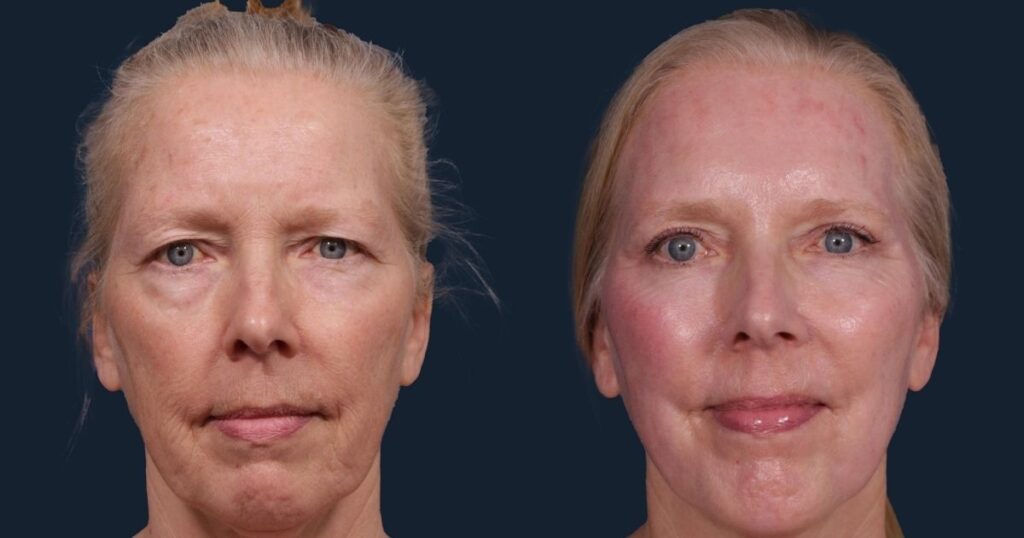
Laser resurfacing acne scars is where things start getting more powerful and more precise. There are two main players here: fractional CO2 laser treatment and Er:YAG laser resurfacing.
The fractional CO2 laser works by targeting columns of skin tissue with focused light energy. It ablates the top layer while stimulating deep collagen remodeling. The results can be dramatic, especially for boxcar and rolling scars. However, it comes with more downtime, usually a week or more of peeling and redness, and carries more risk of hyperpigmentation in darker skin tones.
Er:YAG laser resurfacing is gentler. It removes thin layers of skin with more precision and less heat damage to surrounding tissue. This makes it a popular choice for patients with medium to darker skin who still want energy based scar treatments without the risk that comes with more aggressive lasers.
Both options fall under the umbrella of skin resurfacing procedures and deliver real, clinically measurable improvement. The acne scar treatment results timeline varies, but visible changes usually show up within three to six months as collagen rebuilds and the skin continues healing.
3. Chemical Reconstruction of Skin Scars (TCA CROSS)
TCA CROSS acne scar treatment is specifically designed for those stubborn, deep ice pick scars that seem to resist everything else. The technique involves applying high-concentration trichloroacetic acid directly into the base of the scar using a fine applicator. That triggers a controlled injury that stimulates collagen production right where you need it most.
Ice pick scar repair is notoriously difficult because these scars extend so deep into the skin. Most surface treatments can’t reach the base, which is why ice pick scar dermatology procedures like TCA CROSS have become a go-to option. The acid essentially tricks the scar into healing itself from the bottom up.
Sessions are spaced four to six weeks apart, and three to five rounds are usually needed for noticeable improvement. There is some frosting immediately after the procedure and minor scabbing over the following week, but the treatment is targeted enough that the surrounding skin is largely unaffected. It’s a clever solution to a frustratingly deep problem.
4. Subcision
Think of subcision as freeing your skin from the inside. Subcision is a minor surgical technique where a small needle or cannula is inserted beneath the surface of a depressed scar. The practitioner uses it to break up the fibrous bands of scar tissue that tether the skin downward. Once those bands are released, the skin lifts naturally.
This scar tissue breakdown treatment is particularly effective for rolling scars. In fact, it’s often considered one of the best treatments for rolling scars available in clinical settings. The procedure also creates a small amount of controlled trauma, which again stimulates collagen production in the area.
Subcision is often paired with other treatments. Dermatologists frequently combine it with microneedling or fillers to get compounded results. The swelling and bruising that follow are actually part of the process, as the body fills the treated area with new tissue. Results continue improving for several months after each session.
5. Dermal Fillers
Dermal fillers for acne scars take a more direct approach. Instead of stimulating your body to produce new collagen, fillers physically lift depressed scars from underneath by adding volume directly beneath them. Hyaluronic acid scar fillers are the most commonly used, offering a natural, temporary plumping effect that softens the appearance of indented scars almost immediately.
The results from fillers are visible right away, which makes them popular for people who need improvement quickly, say, before an event or occasion. That said, they are temporary. Hyaluronic acid fillers typically last six to twelve months before they’re gradually absorbed by the body, so maintenance sessions are part of the deal.
Fillers work best on wider, shallower depressions like rolling and boxcar scars. They aren’t ideal for ice pick scars due to the narrow, deep nature of those marks. When used correctly as part of acne scar combination therapy, though, they can make a striking difference in the overall appearance and texture of the skin.
6. PRP (Platelet-Rich Plasma) Therapy
PRP therapy acne scars treatment is one of those treatments that sounds a little sci-fi but is genuinely effective. The process starts with drawing a small sample of your own blood. It gets spun in a centrifuge to separate the platelet-rich plasma from the red blood cells. That concentrated plasma, loaded with growth factors, is then injected into the scarred areas or applied topically after microneedling.
Platelet rich plasma skin repair works because those growth factors directly stimulate cell turnover, collagen synthesis, and tissue regeneration. It’s your body’s own healing machinery, just concentrated and redirected. PRP is considered one of the more natural acne scar skin regeneration options because it uses your own biology rather than synthetic substances.
The improvement is gradual rather than dramatic. Most dermatologists use PRP as part of a wider combination protocol. It pairs exceptionally well with microneedling, as the channels created by the needles allow the plasma to penetrate deeper into the skin. It’s well tolerated by most skin types with minimal side effects.
7. Chemical Peels for Acne Scar Resurfacing
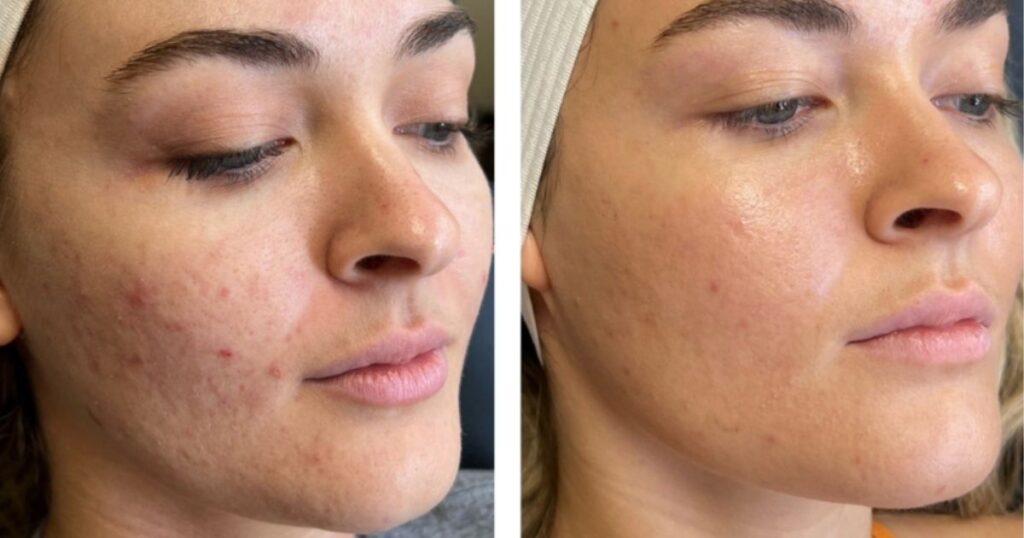
Chemical peel acne scars treatment works by applying an acidic solution to the skin that exfoliates the outermost layers and triggers skin renewal. Depending on the depth of the peel, you can address surface pigmentation, improve texture, or reach deeper into the dermis to stimulate more significant remodeling.
Superficial peels using glycolic or lactic acid work on the surface level and are great for acne scar pigmentation treatment and mild textural concerns. Medium-depth peels, often using TCA at lower concentrations than CROSS, penetrate further and offer more meaningful improvement for acne scar appearance reduction.
The acne scar skin healing process after a peel involves peeling and shedding of the treated skin over three to seven days, depending on the depth of the peel. This post-acne skin repair method has been around for decades and remains a staple of cosmetic dermatology for scars because it’s versatile, accessible, and when done correctly, genuinely effective.
8. Dermabrasion and Microdermabrasion
Dermabrasion acne scar removal is one of the older mechanical resurfacing techniques. A rotating instrument is used to physically sand down the outer layers of skin, smoothing out elevated scars and encouraging fresh skin to surface. It was one of the first professional acne scar solutions before lasers became widely available, and it still delivers solid results for the right candidates.
Traditional dermabrasion is a more aggressive procedure requiring local anesthesia and significant downtime. It’s particularly useful for shallow boxcar scars and surface irregularities. The results can be impressive, but the recovery is real. Expect redness and sensitivity for several weeks.
Microdermabrasion is the gentler cousin. It uses fine crystals or a diamond-tipped wand to buff away the outermost layer of skin. It’s not deep enough to address significant scarring, but it works well as a maintenance treatment, improving overall radiance and helping with mild pigmentation and texture irregularities. Think of it as polishing, not resurfacing.
9. Punch Excision and Minor Surgical Scar Revision
Punch excision acne scars procedure is reserved for the most stubborn cases, usually deep ice pick or boxcar scars that haven’t responded to other methods. The technique involves using a small circular punch tool to physically remove the scar along with the surrounding tissue. The resulting small wound is then sutured closed or left to heal on its own.
Once healed, the small linear scar that remains is much easier to treat with lasers or resurfacing than the original deep crater was. In some cases, the punch site is filled with a small skin graft taken from behind the ear, leaving behind virtually no visible trace once it fully heals.
Professional acne scar revision through minor surgery is a precise, targeted approach. It’s not a procedure for everyone, but for the right scar type, it can eliminate an individual mark completely rather than just improving it. It’s usually combined with laser or resurfacing treatments afterward for the best possible final result.
10. Steroid Injections for Raised and Keloid Scars
Most acne scar treatments focus on depressed scars, but raised scars and keloids need an entirely different approach. Steroid injections raised scars treatment uses corticosteroids, most commonly triamcinolone, injected directly into hypertrophic or keloid scar tissue. The steroid breaks down excess collagen, gradually flattening and softening the raised tissue over time.
This is a targeted form of acne scar skin rejuvenation for a specific scar category that many people overlook. Keloids in particular are notoriously difficult to treat. They grow beyond the original wound boundaries and can be itchy, painful, and visually prominent. Steroid injections are often the first line of treatment, though multiple sessions spaced three to four weeks apart are typically needed.
In more resistant cases, steroid injections are combined with other modalities like laser therapy or silicone sheets to get more comprehensive results. Radiofrequency skin tightening scars treatments are also sometimes added to the mix to help remodel the scar tissue more thoroughly. Advanced acne scar care for raised scars is genuinely a different discipline than treating depressed ones.
How Acne Scar Combination Therapy Gets the Best Results
Here’s something that often gets overlooked. No single treatment fixes every scar. The most experienced dermatologists don’t pick one procedure and hope for the best. They build a customized protocol using several complementary techniques. Subcision might loosen the fibrous bands, fillers might lift the depression temporarily, and then laser resurfacing smooths the surface. Together, the results are dramatically better than any single approach alone.
Acne scar combination therapy is now considered the gold standard in acne scar dermatology treatments. It requires a skilled practitioner who understands how different scar types respond and how to sequence treatments for maximum effect. This is exactly why consulting a qualified dermatologist, rather than jumping into the nearest treatment advertised online, makes such a difference.
The acne scar treatment downtime and acne scar treatment side effects vary depending on what’s used and how aggressively. More invasive procedures mean more downtime but often more dramatic results. Less aggressive options require patience and consistency. Neither is wrong. It depends entirely on your lifestyle, your skin type, your scar severity, and how quickly you want to see change.
What to Expect From Your Acne Scar Dermatologist Consultation
Walking into a dermatology clinic for the first time can feel overwhelming. There’s a lot of terminology, a lot of options, and it’s easy to feel like you need to figure it all out before you even walk through the door. The truth is, you don’t. That’s what the dermatologist is there for.
A good consultation for acne scar dermatologist treatment will begin with a thorough skin assessment. Your provider will identify the scar types present, assess your skin tone and overall skin health, and discuss your goals. From there, they’ll propose a personalized acne scar treatment plan that takes into account your skin type, downtime tolerance, and budget.
Don’t hesitate to ask questions. Ask about the expected timeline, the number of sessions, and what the acne scar skin healing process will look like for your specific treatment. The more informed you are, the more confident you’ll feel going into each session and the better you’ll manage your expectations.
FAQ’s
How long does acne scars treatment take to show results?
Most professional treatments show noticeable improvement within three to six months, as collagen remodeling takes time to fully develop after each session.
Is acne scars treatment permanent?
Many treatments produce long-lasting results, but some, like dermal fillers, require maintenance. Laser and surgical options tend to offer more durable outcomes.
Can acne scars be completely removed?
Complete removal isn’t always realistic, but significant improvement is absolutely achievable with the right combination of treatments and a realistic timeline.
Is acne scar treatment safe for dark skin tones?
Yes, but treatment selection matters. Microneedling and subcision are generally safer for darker skin tones. Aggressive lasers carry higher pigmentation risks and require careful consideration.
How much does professional acne scar treatment cost?
Costs vary widely depending on the procedure, clinic, and number of sessions needed. Consulting a dermatologist for a personalized plan gives you the most accurate estimate.

James Miller is a fashion writer and editor with over a decade of experience in style journalism, trend analysis, and brand consulting. His expertise spans luxury fashion, sustainable clothing, and cultural style movements. As the editorial lead at writeforusfashion, James combines creativity with credibility, ensuring content is accurate, engaging, and influential—building authority and trust in the ever-evolving fashion industry.