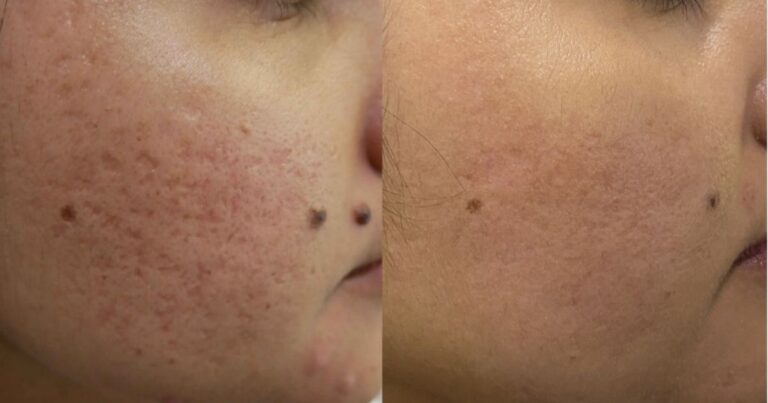

Types of Acne Scars: Rolling Scars, Boxcar Scars, Ice Pick & How to Treat Each
You finally got rid of the breakout. But the scars? They stayed. And now every time you look in the mirror, you’re reminded of it all over again. That’s one of the most frustrating parts of dealing with acne, it doesn’t always leave quietly.
Here’s the thing though. Not all acne scars are the same. Treating them like they are is exactly why so many people spend money on products that do absolutely nothing. If you’ve tried everything and seen zero results, there’s a good chance you’ve been targeting the wrong scar type with the wrong solution.
This guide breaks it all down. What each type looks like, why it forms, and what actually works to treat it.
Why Do Acne Scars Form?
Acne scars form when a breakout damages the deeper layers of your skin. When your skin tries to heal itself, it doesn’t always rebuild perfectly. Sometimes it produces too little collagen. Sometimes the tissue underneath pulls downward. The result is a depression, pit, or uneven texture that lingers long after the pimple is gone.
Not every pimple leaves a scar. But deeper, inflamed breakouts like cysts and nodules are far more likely to cause lasting damage. Picking or squeezing makes it significantly worse. Your skin goes into overdrive trying to repair itself, and the healing process often gets messy.
Post-inflammatory hyperpigmentation, those dark or red spots left behind, is different from a true scar. It’s a pigment issue, not a structural one. Most of the time it fades on its own. True acne scars involve actual changes to the skin’s architecture, and that’s what we’re focusing on here.
Dermatologists classify most acne scars as atrophic, meaning tissue is lost rather than gained. There are three main types that fall under this category, and each one behaves differently under the skin.
Read More: Nail Extensions 101: The Ultimate Guide to Acrylic, Gel, and Poly Gel Nails
1. Rolling Scars

Rolling scars give your skin that wavy, uneven appearance. They don’t have sharp edges. Instead, they create a gentle undulation across the surface, almost like the skin has been pushed and pulled unevenly from below.
What causes them? Fibrous bands of tissue form between the surface of the skin and the deeper subcutaneous layer. These bands tether the skin downward, creating that rolling, shadowed look. The edges are sloped and soft, which is actually what makes them more responsive to treatment than other types.
They tend to appear on the cheeks and jawline, areas where the skin is more mobile. They often look worse in certain lighting, especially direct or raking light. In softer light, they can almost disappear entirely.
Rolling scars respond well to subcision, a minimally invasive procedure where a dermatologist inserts a small needle beneath the skin to break apart those fibrous bands. Once the tethering is released, the skin can rise back up. Radiofrequency microneedling (RF-MN) also works well here, as it stimulates collagen remodeling deep within the skin.
Dermal fillers can provide immediate improvement by plumping the depressed area from below. The results aren’t permanent, but they can be quite dramatic. Many dermatologists recommend combining subcision with collagen induction therapy for best long-term outcomes. Treating rolling scars often comes down to releasing what’s pulling the skin down, then rebuilding what was lost.
2. Boxcar Scars
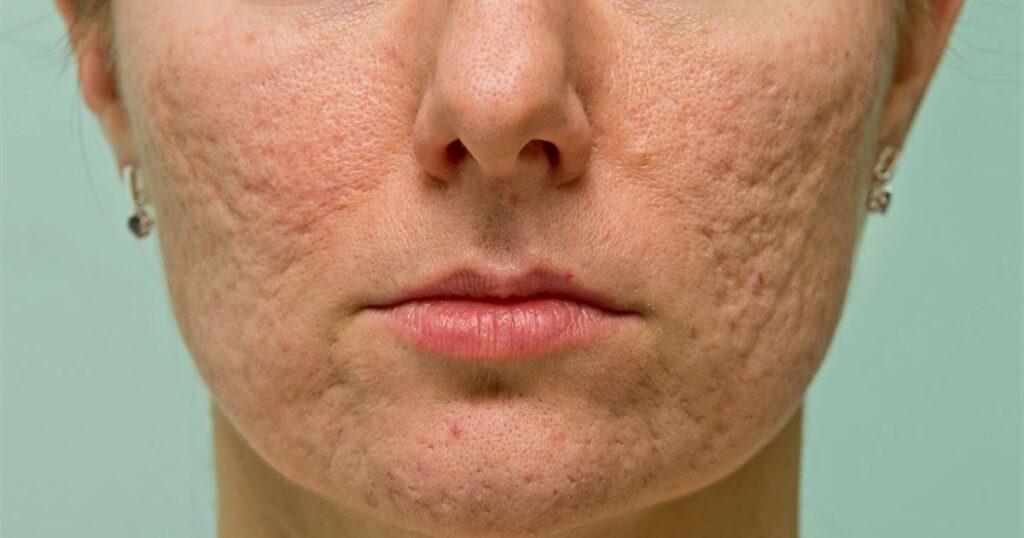
Boxcar scars are wider and have clearly defined vertical walls. Think of them as craters with sharp, punched-out edges. They can be shallow or deep, and that depth matters a lot when choosing a treatment path.
They form when an inflamed breakout destroys collagen in a concentrated area. The tissue is lost, the edges remain defined, and the base sits flat. Shallow boxcar scars are easier to treat. Deep ones are more stubborn.
These scars are most common on the temples and cheeks. They’re often confused with chickenpox scars because of their similar shape. The key difference is context. If you’ve dealt with severe acne in those areas, boxcar scars are a likely culprit.
Fractional CO2 laser therapy is one of the most effective options for boxcar scar correction. It resurfaces the outer skin while stimulating new collagen production underneath. Er:YAG laser resurfacing is a gentler alternative, often recommended for those with darker skin tones where aggressive treatments can risk pigmentation changes.
For deeper boxcar scars, punch excision is sometimes used. A small surgical tool removes the scar entirely, and the resulting wound is sutured or grafted. It sounds intense, but for very deep scars that don’t respond to lasers, it’s often the most direct route.
Radiofrequency microneedling also works well here, especially for those who want a less aggressive entry point into clinical acne scar correction. Combining laser resurfacing with RF-MN in a structured treatment plan often yields the most visible skin texture improvement over time.
3. Ice Pick Scars
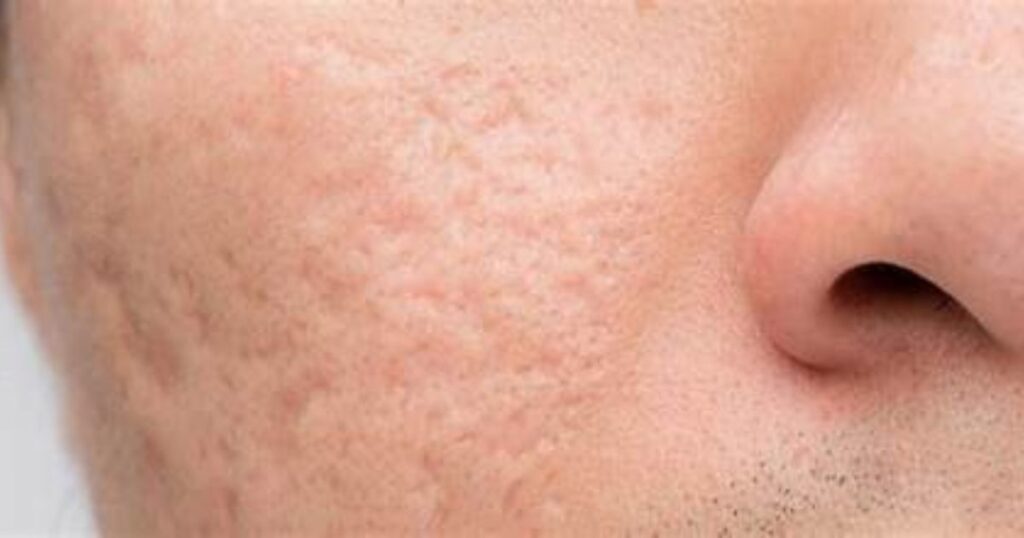
Ice pick scars are exactly what the name suggests. They’re narrow, deep, and go straight down into the skin like a tiny puncture. They’re usually less than 2mm wide but can be quite deep, sometimes reaching all the way to the dermis or even deeper.
These form when infected material from a cyst or deep pimple destroys the follicle wall, creating a narrow channel that heals in a contracted, pitted way. Because of how deep they go, they’re genuinely the most difficult type of acne scar to treat.
Surface-level treatments barely touch them. Lasers can improve their appearance, but they can’t close a deep, narrow channel from the top down. That’s why the treatment of choice here is TCA CROSS, which stands for chemical reconstruction of skin scars.
In TCA CROSS, a highly concentrated solution of trichloroacetic acid is applied directly into the base of each ice pick scar using a fine applicator. This triggers a controlled wound healing response deep inside the scar. Over several weeks, new collagen fills the channel from the bottom up. Most patients need multiple sessions, typically three to six, spaced several weeks apart.
Punch excision is another option for particularly stubborn ice pick scars. The narrow, deep column of scarred tissue is removed entirely and the skin is closed. After healing, the resulting mark is usually much more amenable to laser resurfacing or other surface treatments.
Platelet-rich plasma (PRP) therapy is increasingly being used alongside these procedures to accelerate healing and boost collagen stimulation. On its own, PRP won’t fully resolve ice pick scars. But as part of a broader treatment protocol, it adds meaningful value.
Combination Therapy is Key
Here’s something most skincare content won’t tell you directly. Most people don’t have just one type of acne scar. They have a mix. And that means a single treatment rarely solves everything.
A dermatologist-led skincare approach matters here more than anywhere else. A well-designed, personalized scar treatment plan might include subcision for rolling scars, TCA CROSS for ice pick scars, and fractional laser for boxcar scars — all in a sequenced protocol designed around your skin’s specific needs.
Advanced aesthetic dermatology has moved well past the one-size-fits-all era. Combination therapy for acne scars is now considered the clinical standard. Trying to DIY this at home with serums and peels might produce minor improvements in texture or tone, but for structural scars, you really do need professional intervention.
Skin resurfacing procedures work by triggering controlled injury. Your skin heals and rebuilds with improved architecture. The more precise and targeted the treatment, the better the long-term result. This is why scar depth classification matters so much during your initial consultation. Your dermatologist needs to know exactly what they’re working with before choosing a path forward.
Post-Treatment Care
After any clinical procedure, your skin is in a vulnerable state. How you treat it over the next few weeks plays a huge role in your final outcome.
Sun protection is non-negotiable. UV exposure after laser resurfacing or TCA CROSS can trigger pigmentation changes that are harder to fix than the original scars. Broad-spectrum SPF 50 every morning, no exceptions.
Keep your skin barrier intact. Use gentle, hydrating cleansers and skip active ingredients like retinoids and acids until your dermatologist gives you the green light. Your skin is trying to rebuild. You don’t want to disrupt that process.
Medical-grade skincare products can support healing. Look for ingredients like centella asiatica, niacinamide, and ceramides during the recovery phase. They support the skin barrier without adding unnecessary irritation.
Patience is genuinely part of the treatment. Collagen remodeling takes months. Results from a single laser session may not be fully visible for three to six months. That’s not a sign the treatment failed. It’s just biology doing its job at its own pace.
How to Remove Acne Scars Naturally in a Week
Let’s be direct about this. You cannot fully remove structural acne scars naturally in a week. Anyone promising that is misleading you.
What you can do in a short timeframe is improve skin tone, reduce inflammation, and give your scars a less noticeable appearance. That’s not nothing, but it’s not the same as actual scar removal.
Some ingredients do have genuine evidence behind them for long-term use. Vitamin C can help with post-inflammatory hyperpigmentation. Retinoids improve skin turnover and can gradually smooth mild surface texture. Niacinamide calms redness and supports the skin barrier. Azelaic acid is useful for both pigmentation and inflammation.
The key word in all of that is gradual. Even the most effective over-the-counter ingredients take weeks to months to show meaningful results. And for true atrophic scars with structural depth, no topical ingredient can fill what’s been lost beneath the surface.
If you’re hoping to look better for an event in a week, good makeup application and skincare hydration can go a long way visually. But if you’re looking for real, lasting improvement, that requires a consistent routine over time, and for deeper scars, professional treatment.
Takeaway
Acne scars stick around for a reason. They’re not just surface marks. They represent changes in the skin’s underlying structure, and that depth is exactly why treating them requires a thoughtful, informed approach.
Rolling scars need tethering released and collagen rebuilt. Boxcar scars respond to resurfacing and volume restoration. Ice pick scars require targeted, deep intervention like TCA CROSS or punch excision. Most people need more than one approach, and that’s completely normal.
The most important step you can take is getting a proper scar depth classification from a qualified dermatologist. Once you understand exactly what you’re dealing with, you can build a treatment plan that’s actually designed to work. Not guesswork. Not hope. Just the right treatment, matched to the right scar.
Your skin has already been through a lot. It deserves a plan that actually fits.
FAQ’s
What is the difference between rolling scars and boxcar scars?
Rolling scars have soft, sloping edges and create a wave-like texture, while boxcar scars have sharp, defined vertical walls and a flat base. The treatment approach differs significantly for each type.
Can ice pick scars be completely removed?
Ice pick scars can be significantly improved but complete removal is difficult due to their depth. TCA CROSS and punch excision are the most effective options, often requiring multiple sessions.
Is laser treatment safe for darker skin tones?
Yes, but the type of laser matters. Er:YAG laser resurfacing and radiofrequency microneedling are generally safer for darker skin tones than aggressive ablative CO2 lasers.
How many sessions of TCA CROSS are typically needed?
Most people need between three to six sessions of TCA CROSS, spaced four to six weeks apart, to see meaningful improvement in ice pick scars.
Do acne scars get worse with age?
They can appear more prominent over time as natural collagen loss reduces skin volume and elasticity. This is another reason early treatment from a dermatologist is worthwhile.

James Miller is a fashion writer and editor with over a decade of experience in style journalism, trend analysis, and brand consulting. His expertise spans luxury fashion, sustainable clothing, and cultural style movements. As the editorial lead at writeforusfashion, James combines creativity with credibility, ensuring content is accurate, engaging, and influential—building authority and trust in the ever-evolving fashion industry.